2026-11-19 · David
Dealing With Salt Air Corrosion On Coastal Roofs
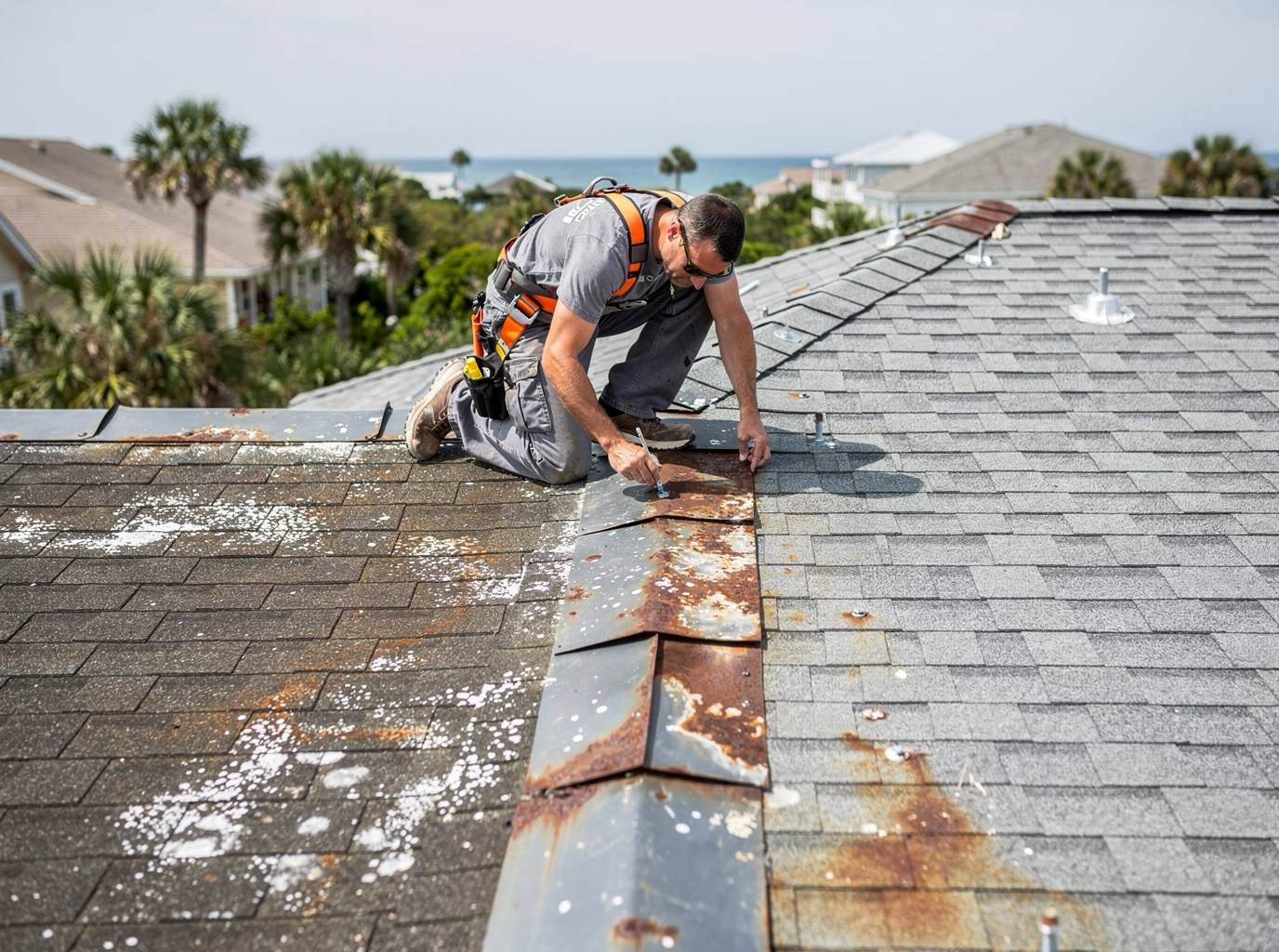
Salt air from the Atlantic and the St. Johns River speeds up corrosion on metal components of roofs in Jacksonville, particularly on fasteners, flashing, and panels exposed daily to humid subtropical conditions. Homes in Atlantic Beach, Neptune Beach, and riverside sections of Downtown Jacksonville and Riverside see this effect first because prevailing winds carry salt inland several miles. Regular visual checks combined with prompt coating or replacement of affected parts keep water intrusion from starting.
How Salt Air Affects Roofing Materials in Duval County
Metal roofs face the fastest visible damage because salt crystals draw moisture to steel and aluminum surfaces, creating pitting that starts at screw heads and seams. Asphalt shingles last longer but lose granules faster when underlying metal drip edges corrode. Tile roofs hold up better yet still need attention to the metal underlayment and ridge caps that sit directly in the salt path. In Mandarin and Arlington, where many homes sit on lots with less tree cover, the constant breeze keeps surfaces wet longer after rain, shortening the interval between maintenance visits. Owners who choose marine-grade coatings or stainless fasteners see slower progression even on older stock built before modern coatings became standard.
Visible Signs in Neighborhoods Near the Water
Look for white powdery residue along panel edges in Springfield and Avondale homes closest to the river. Rust streaks running down from ridge vents or skylights often appear first on south-facing slopes that receive the strongest onshore winds. In San Marco, where many 1920s–1950s homes still have original galvanized flashing, small brown spots on the ceiling drywall inside the attic signal the corrosion has already reached the deck. Checking these markers after every summer storm prevents small issues from turning into leaks that require full roof leak repair.
Practical Maintenance Steps for Coastal Homes
Schedule a roof inspection at least twice a year, once before hurricane season and again after winter nor’easters, focusing on every fastener and seam within ten feet of the eaves. Rinse metal surfaces with fresh water from a garden hose every three months to remove salt buildup before it bonds. Apply elastomeric coatings labeled for marine environments to existing metal roofs in Atlantic Beach and Neptune Beach properties when surface rust covers more than five percent of any panel. Homeowners in Riverside and Avondale often combine this with gutter and fascia services so water is directed away from the most exposed edges. These steps extend service life without requiring full replacement on otherwise sound decks.
Choosing Upgrades That Resist Salt Air
When corrosion reaches the decking, switching to metal roofing with factory-applied PVDF finishes gives the longest interval before the next major intervention. Stainless or ceramic-coated screws replace standard zinc ones on every project in coastal Duval County. Adding ridge vents with built-in mesh keeps salt-laden air from entering the attic while still allowing airflow needed in the humid climate. After any upgrade, follow the schedule outlined in When To Schedule A Pre-Storm Roof Inspection In Duval County to catch new issues early. These choices match the actual wind and moisture patterns seen along the river and beaches rather than generic inland recommendations.