2026-11-19 · David
Signs Your Jacksonville Roof Needs Ventilation Improvements
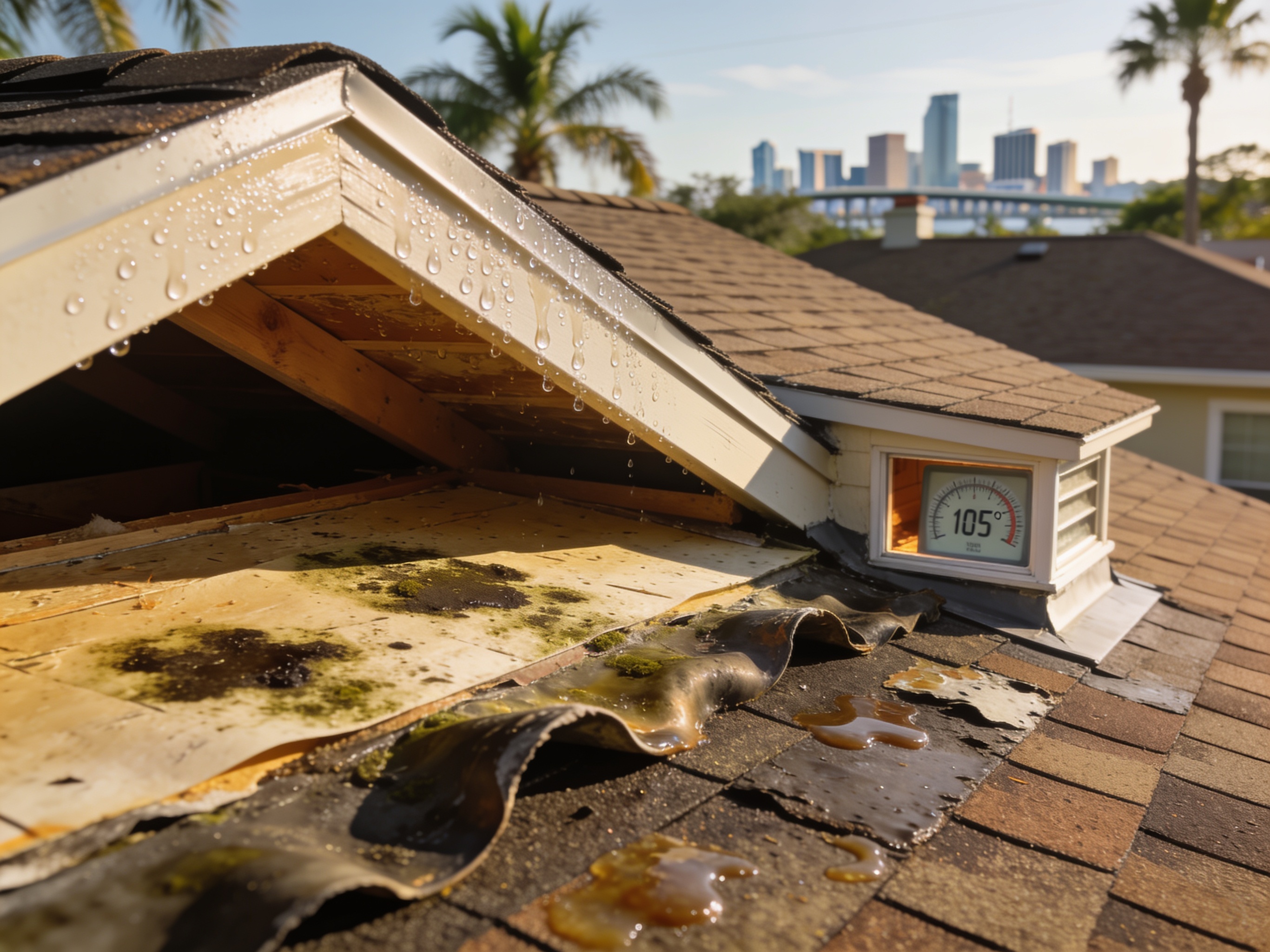
Attics in Jacksonville that regularly exceed 130 degrees during summer afternoons or trap visible moisture point directly to inadequate ventilation. In Duval County's humid subtropical conditions, with hot summers and mild winters, trapped heat and moisture accelerate damage to shingles and framing in older housing stock found in Riverside and San Marco.
High Attic Temperatures in Summer
Jacksonville summers push roof deck temperatures well above outdoor readings when ventilation cannot exhaust rising heat. Homeowners in Avondale and Springfield often notice second-floor rooms staying warmer than expected even with air conditioning running. This buildup shortens shingle life by drying out the underside and causing premature cracking or curling. Checking attic temperature with a simple infrared thermometer on a 90-degree day reveals the gap; readings above 130 degrees typically signal the need for added intake or exhaust vents. Proper airflow keeps the entire assembly closer to outside air temperature and protects insulation from heat degradation.
Moisture Buildup and Mold Growth
High humidity combined with poor ventilation traps condensation on roof sheathing and rafters throughout Duval County. Homes near the St. Johns River in Arlington or Mandarin frequently develop black spots or musty odors in the attic after extended rainy periods. This moisture can migrate into living spaces and affect drywall ceilings. Residents should inspect for water stains on insulation or rust on metal fasteners during routine checks. Addressing ventilation early prevents larger issues that may require roof leak repair later.
Premature Shingle Wear and Buckling
Shingles on Jacksonville roofs age faster when heat and moisture remain trapped beneath the deck. In neighborhoods such as San Marco and Downtown Jacksonville, 10- to 15-year-old roofs sometimes show granule loss or edge curling that should not appear until later. Buckling sections appear where trapped vapor pushes upward during mild winter temperature swings. These visible changes often trace back to blocked soffit vents or undersized ridge vents rather than the shingles themselves. A thorough roof inspection can confirm whether ventilation upgrades will extend remaining service life.
Checking for Ice Dams and Related Issues After Storms
Although winters stay mild, sudden cold snaps after heavy rain can still create localized ice dams on poorly ventilated roofs. Homeowners in Orange Park and Atlantic Beach notice water intrusion along eaves following winter fronts. The same ventilation shortfalls that cause summer heat problems allow warm attic air to melt and refreeze snow or frost. After summer storms, follow guidance in our article on how to check for roof leaks after heavy summer storms to spot early moisture signs. Scheduling a pre-storm roof inspection in Duval County before hurricane season helps identify ventilation gaps that could worsen wind-driven rain damage.
Jacksonville Roofing operates from 1310 Morning Dove Ct with hours Mon–Fri 8am–6pm and Sat 9am–2pm. Regular ventilation assessments help maintain roof performance across the county without unnecessary replacements.