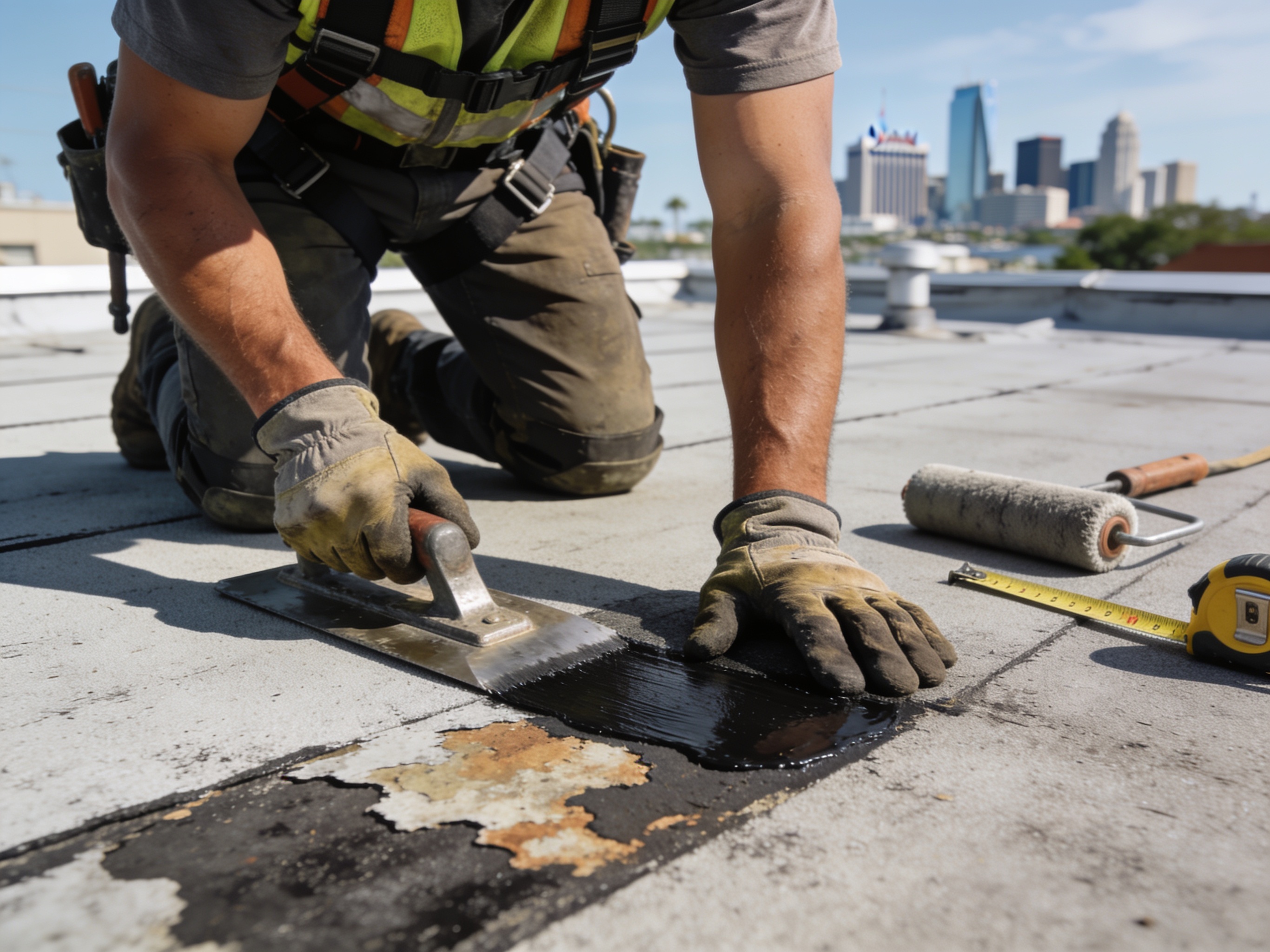
Jacksonville's humid subtropical climate brings intense summer heat and frequent heavy rains that accelerate wear on flat roof membranes. Homes and buildings in neighborhoods like Riverside, San Marco, and Downtown Jacksonville often feature older flat roof sections on additions or commercial structures where standing water collects along the St. Johns River corridor. Technicians address these conditions by first mapping drainage slopes and checking for ponding near HVAC units or parapet walls that trap moisture in Duval County's mild winters.
Common materials here include TPO, EPDM, and modified bitumen, each reacting differently to ultraviolet exposure and salt air drifting from Atlantic Beach and Neptune Beach. Edge cases frequently involve failed flashings around skylights or penetrations on buildings in Arlington and Mandarin where tree canopy debris blocks scuppers. Proper repair requires matching the existing membrane type and ensuring seams withstand the county's wind-driven rain events without relying on generic coatings that peel under local humidity.
Code considerations in Jacksonville include ensuring repairs meet current Florida Building Code wind-load standards for Duval County, particularly on structures near EverBank Field or the Cummer Museum area. Homeowners in Springfield and Avondale often overlook gradual blistering until interior leaks appear, making early inspection critical before damage reaches the decking. Work is scheduled around business hours at 1310 Morning Dove Ct with availability Monday through Friday 8am to 6pm and Saturday 9am to 2pm.
Technician insight
In Jacksonville, the thing that catches most people out with Flat Roof Repair is how quickly ponding water from our humid subtropical summers finds seams on older modified bitumen roofs in Riverside and San Marco. The St. Johns River humidity keeps surfaces damp longer than inland spots, so a small split near a scupper often spreads under the membrane before homeowners notice interior stains.
Ponding Leak on Riverside Addition
A flat roof over a home addition in Riverside showed repeated interior leaks after summer rains. Inspection revealed clogged scuppers and failed EPDM seams allowing water to migrate under the membrane toward the deck. Technicians cleared drains, welded new compatible patches, and restored slope to direct flow. No further leaks appeared during the next rainy season.
Flat Roof Repair Services We Offer
✓TPO Membrane Repair
Locates and welds seams on TPO systems common in Jacksonville commercial buildings to stop leaks before they reach insulation layers.
✓EPDM Roof Patching
Applies compatible EPDM patches over punctures and splits caused by foot traffic or debris in humid Duval County conditions.
✓Modified Bitumen Restoration
Restores aged modified bitumen surfaces on flat roofs in Riverside and San Marco using torch or cold-process methods suited to local heat.
✓Flat Roof Leak Detection
Uses moisture scanning and infrared tools to trace hidden leaks in buildings near the St. Johns River where water migrates under membranes.
✓Drainage System Clearing
Clears scuppers, gutters, and internal drains on flat roofs in Mandarin and Arlington to prevent ponding during summer thunderstorms.
✓Coating Application for Flat Roofs
Applies elastomeric coatings over existing flat roof surfaces in Orange Park and Atlantic Beach to extend service life against UV and humidity.
Flat Roof Repair Cost in Jacksonville, FL
| Service | Typical Range | What Affects It |
|---|---|---|
| Small membrane patch | $250–$600 | Depends on access and membrane thickness |
| Drainage clearing and minor repair | $300–$750 | Higher when internal drains require opening |
| Sectional coating restoration | $1,200–$3,500 | Varies with square footage and surface prep needs |
| Full leak tracing and multi-point repair | $800–$2,200 | Increases with hidden moisture under older decks |
Ranges are typical for Jacksonville, FL and confirmed with an exact written quote before any work starts.
How it works
- 1
Site Assessment
Technician inspects the flat roof surface, drainage, and penetrations while noting exposure to Jacksonville's river humidity and summer storms.
- 2
Material Matching
Identifies existing membrane type and selects compatible repair products that perform under Duval County's wind and moisture conditions.
- 3
Targeted Repair Execution
Cleans the area, applies patches or welds, and restores slopes to direct water away from critical points on the roof.
- 4
Final Drainage Check
Tests water flow across the repaired sections to confirm no ponding remains before leaving the site in neighborhoods like Springfield.
Pricing
Pricing varies by roof size, membrane type, and extent of water damage; upfront quotes provided after inspection.