2026-11-19 · David
Understanding Tile Roof Maintenance In Humid Florida Climates
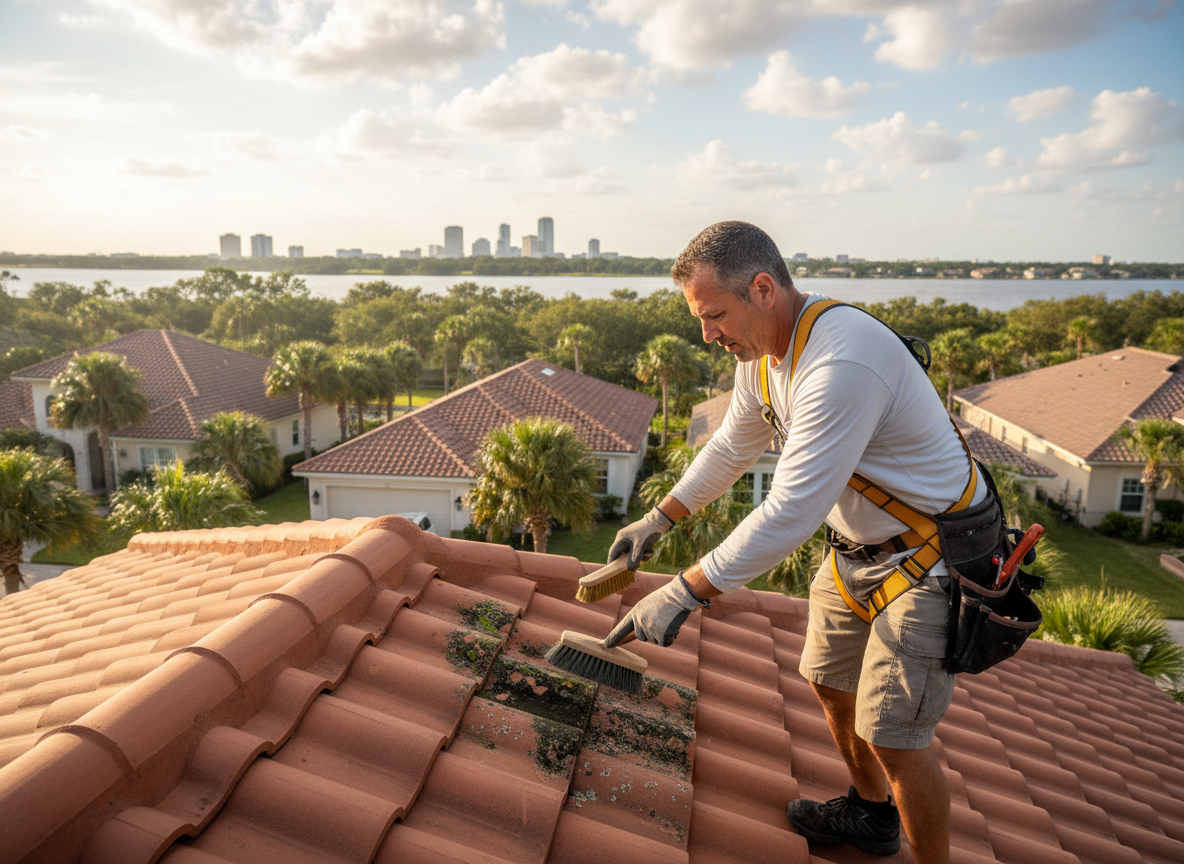
Tile roofs in Jacksonville's humid subtropical climate with hot summers and mild winters typically need professional inspection every 2–3 years and targeted cleaning once a year to prevent moisture retention and algae buildup that shorten lifespan.
Climate Effects on Tile Roofs in Duval County
Jacksonville's hot, humid summers combined with mild winters create constant moisture that seeps under tile edges and promotes algae and lichen growth on the surface. Homes in Riverside and San Marco often feature older tile installations that trap heat and humidity differently than newer builds in Mandarin or Arlington. The St. Johns River adds extra humidity near Downtown Jacksonville and Springfield, accelerating granule loss on underlayment. These conditions demand more frequent checks for cracked tiles or displaced pieces after summer storms. Proper ventilation under the tiles becomes critical because trapped moisture leads to wood rot in the decking faster than in drier regions.
Routine Inspection Practices
Homeowners should schedule a full roof inspection each spring before hurricane season and again in late fall. Focus on checking for missing or cracked tiles, damaged flashing around chimneys, and sealant condition at valleys. In Avondale and San Marco, mature tree cover increases the chance of branch debris lodging between tiles, so inspectors look for these hidden spots first. Use binoculars from the ground for initial scans, then have a professional climb for close examination. Document any changes with photos to track progression over multiple seasons. This approach catches small issues before they require larger interventions.
Cleaning and Algae Control Steps
Begin cleaning by removing loose debris with a soft-bristle brush and blower, avoiding high-pressure water that can force moisture under tiles. Apply a mild algae treatment formulated for clay or concrete tiles, letting it dwell before gentle rinsing. Properties near Atlantic Beach and Neptune Beach face added salt exposure that combines with humidity to speed discoloration, so coastal homes may need treatment twice yearly. Always work in sections from the ridge down, and never walk directly on tiles without proper foot protection. These steps keep water flowing correctly off the roof and reduce long-term staining.
Addressing Storm and Tree Damage
After heavy rains or high winds, examine tile alignment especially in yards with large oaks common across Mandarin and Arlington. Tree Related Roof Damage Common In Jacksonville Yards outlines how fallen limbs affect tile roofs specifically. Check for punctures or shifted tiles that allow water entry during the next storm. Secure loose tiles promptly and replace any that show hairline cracks, as humidity will widen them quickly. Pair this with a roof inspection to assess underlayment condition after significant weather events.
When Professional Service Is Needed
If tiles show widespread cracking, recurring leaks appear in the attic, or algae returns within months of treatment, contact a specialist. Tile roofing professionals understand local wind loads and humidity effects on different tile profiles used in Duval County homes. Dealing With Salt Air Corrosion On Coastal Roofs provides additional guidance for properties closer to the beaches. Schedule service during business hours at 1310 Morning Dove Ct, Monday through Friday 8am–6pm or Saturday 9am–2pm for assessments tailored to Jacksonville conditions.